Top Researchers
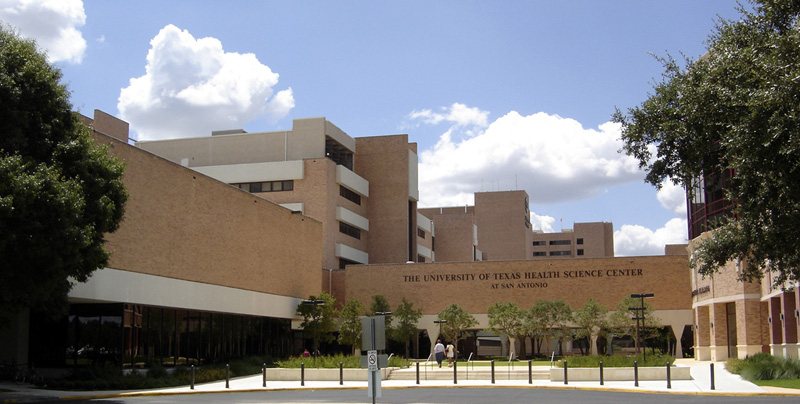
Top Medicine Researchers at The University of Texas at San Antonio Health Science Center for 2026
Research in Medicine at The University of Texas at San Antonio Health Science Center spans a wide range of clinical and translational questions, with a clear emphasis on brain health, aging, and disease mechanisms. The work highlighted below reflects how researchers are connecting imaging, genetics, physiology, and patient outcomes to better understand complex conditions.
From dementia and Alzheimer’s disease to kidney injury, stroke, lymphoma, and biomarker validation, these recent studies show an active community working across specialties. Readers will find a snapshot of the themes shaping the institution’s medical research over the past year.
Featured Researchers
Sudha Seshadri
Sudha Seshadri’s recent Medicine research at The University of Texas at San Antonio Health Science Center centers on dementia, vascular cognitive impairment, and Alzheimer’s disease, with work spanning diagnostic criteria, clinical trial evidence, and diet-related risk.
Activity over the last year: 93 indexed journal articles.
Top publications:
- Revised Diagnostic Criteria for Vascular Cognitive Impairment and Dementia—The VasCog-2-WSO Criteria (Sep 2025)
- Rapamycin treatment for Alzheimer’s disease and related dementias: a pilot phase 1 clinical trial (May 2025)
- Ultra-processed food consumption and risk of dementia and Alzheimer's disease: The Framingham Heart Study (Jan 2025)
Kumar Sharma
Kumar Sharma’s recent work links nephrology with broader biological mechanisms, including kidney injury, kidney disease progression, and possible connections between renal damage and brain toxicity.
Activity over the last year: 26 indexed journal articles.
Top publications:
- Quinolinic acid potentially links kidney injury to brain toxicity (Feb 2025)
- Divergent sex-specific effects on a ketogenic diet: Male, but not female, mice exhibit oxidative stress and cellular senescence (Jul 2025)
- The enzyme SMPDL3b in podocytes decouples proteinuria from chronic kidney disease progression in experimental Alport Syndrome (May 2025)
Mohamad Habes
Mohamad Habes is focusing on brain aging and Alzheimer’s disease through imaging, cognition, white matter changes, and AI-based assessment methods.
Activity over the last year: 33 indexed journal articles.
Top publications:
- White Matter Abnormalities and Cognition in Aging and Alzheimer Disease (Jun 2025)
- The effect of Alzheimer's disease genetic factors on limbic white matter microstructure (Apr 2025)
- Comparative Analysis of Artificial Intelligence–Based Quantification versus Visual Rating of Enlarged Perivascular Spaces in the Multi-Ethnic Study of Atherosclerosis Cohort (Dec 2025)
Adolfo Diaz Duque
Adolfo Diaz Duque’s recent publications examine disparities in lymphoma care and outcomes across institutional settings, bringing pathology, dermatology, and neurology perspectives into view.
Activity over the last year: 18 indexed journal articles.
Top publications:
- Unequal outcomes: The role of institutional setting in the management of primary CNS lymphoma (Nov 2025)
- Clinical disparities in enteropathy-associated T-cell lymphoma: A national cancer database study of 736 patients treated at academic and community cancer centers (Nov 2025)
- Facility-level disparities in outcomes of subcutaneous panniculitis-like T-cell lymphoma: A national cancer database analysis (Nov 2025)
Rüssel J. Reiter
Rüssel J. Reiter’s recent Medicine output ranges from melatonin and skin health to immunotherapeutic strategies for blood and urological cancers.
Activity over the last year: 27 indexed journal articles.
Top publications:
- Melatonin and the Skin: Current Progress and Perspectives for Human Health (Feb 2025)
- Next-generation immunotherapeutic approaches for blood cancers: Exploring the efficacy of CAR-T and cancer vaccines (May 2025)
- Bispecific antibodies as powerful immunotherapeutic agents for urological cancers: Recent innovations based on preclinical and clinical evidence (Jan 2025)
Justin Mascitelli
Justin Mascitelli is working on stroke intervention and endovascular therapy, with recent studies on rescue stenting, thrombectomy systems, and predictors of recanalization outcomes.
Activity over the last year: 27 indexed journal articles.
Top publications:
- Comparative Safety and Efficacy of Balloon-Mounted and Self-Expanding Stents in Rescue Stenting for Large Vessel Occlusion: Secondary Analysis of the RESCUE-ICAS Registry (Jun 2025)
- Stroke thrombectomy with a novel reperfusion system including a 0.088′′ aspiration catheter: the Imperative Trial (Jul 2025)
- Predictors of Futile Recanalization After Endovascular Therapy for Acute Large Vessel Occlusive Intracranial Atherosclerosis: A Secondary Analysis of RESCUE-ICAS (Aug 2025)
Jeremy A. Tanner
Jeremy A. Tanner’s recent research spans genetic disorders, physical activity in older adults, and imaging workflow, reflecting a mix of psychiatry, physiology, and epidemiology.
Activity over the last year: 23 indexed journal articles.
Top publications:
Claudia L. Satizábal
Claudia L. Satizábal’s work brings together brain amyloid, biomarkers of cerebral small vessel disease, and APOE-related pathways, with a strong focus on physiology, psychiatry, and genetics.
Activity over the last year: 29 indexed journal articles.
Top publications:
- Elevated serum cortisol associated with early‐detected increase of brain amyloid deposition in Alzheimer's disease imaging biomarkers among menopausal women: The Framingham Heart Study (Apr 2025)
- MarkVCID2 Consortium for Clinical Validation of Biomarkers of Cerebral Small Vessel Disease: Validation Framework and Baseline Characteristics (Sep 2025)
- Altered gut microbiota mediates the association between APOE genotype and amyloid-β accumulation in middle-aged adults (Oct 2025)
What The University of Texas at San Antonio Health Science Center's Medicine Community Is Working On
Across the featured researchers, Physiology appears most often, with Psychiatry and Mental health close behind, and Genetics, Neurology, and Epidemiology also recurring. That pattern suggests a community actively studying how biological systems, brain health, and population-level factors interact in disease development and care. The result is a portfolio that moves comfortably between mechanistic questions and clinically meaningful outcomes, especially in aging, neurodegeneration, and related chronic conditions.- Physiology - seen across 5 of the featured researchers
- Psychiatry and Mental health - seen across 4 of the featured researchers
- Genetics - seen across 2 of the featured researchers
- Neurology - seen across 2 of the featured researchers
- Epidemiology - seen across 2 of the featured researchers
Together, these studies reflect a research environment that moves between fundamental biology, clinical decision-making, and population-level evidence. Explore the featured researchers below to see how different specialties converge at The University of Texas at San Antonio Health Science Center, and use Resub to help keep your own citation discovery, manuscript formatting, and submission prep moving smoothly.
Top researchers use tools to scale their productivity and impact. Try Livewrite for free today.